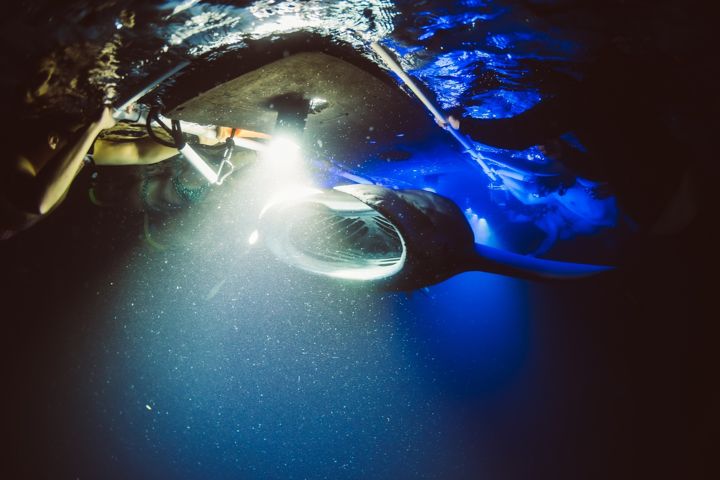
The manta ray night snorkel off Kona is the thing people still talk about years after a Big Island trip. You float at the surface after dark, holding a lighted board, and reef manta rays rise out of the black water to feed in the light, looping and barrel-rolling so close below you that you could touch them (please don’t). It is not an aquarium and it is not a show. It is wild animals doing what they do every night, and you get a front-row seat.
This guide covers how it works, how to choose between snorkeling and diving, what to bring, whether it suits kids, how to handle seasickness, and when to go.
The short version
- What: a guided night snorkel over a manta ray feeding site off the Kona coast.
- Where: off Keauhou Bay, south of Kailua-Kona. There is a second site near the Kona airport.
- When: year round, every night. Later departures tend to see more mantas and quieter water.
- How long: about 1.5 hours door to door, with about 30 minutes in the water.
- Who we recommend: Hawaii Manta Ray, from Keauhou Bay. $118 adults, $99 kids, ages 4 and up.
- Book it: early in your trip, so you have spare nights if the ocean cancels one. Our Kona manta ray night snorkel page has the details and booking.
Why the mantas come
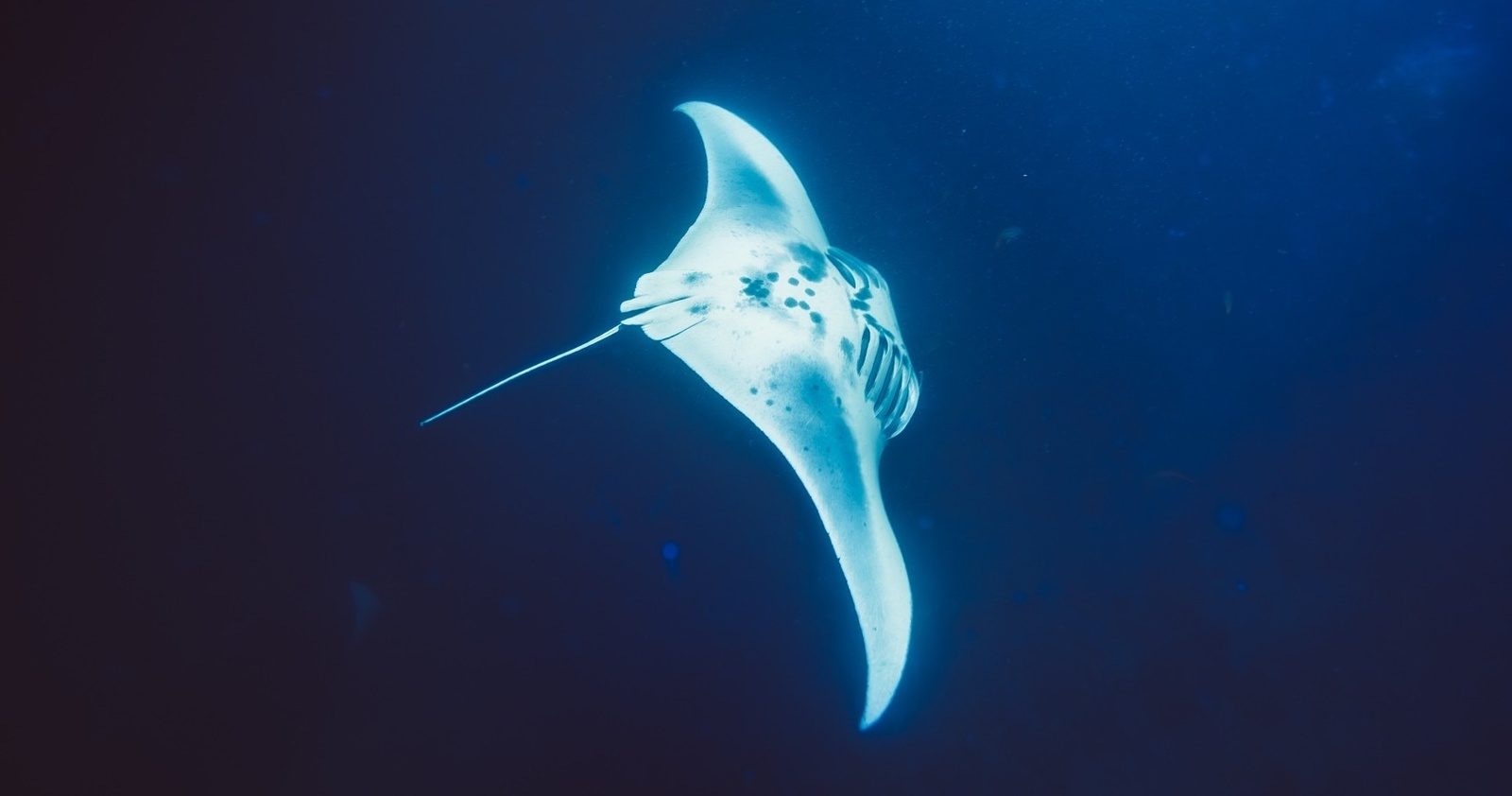
Reef manta rays are filter feeders. They eat plankton, the tiny animals that drift in the water, and plankton is drawn to light. Shine enough light into the ocean at night and the plankton gathers in a cloud, and the mantas come to feed on it, swimming open-mouthed through the light and somersaulting to stay in the thickest part.
That is what the tours do: put lights in the water at the same spots every night. The mantas off Kona have learned where the food is, and sightings are very reliable, though never certain, because they are wild. Each manta can be told apart by the spot pattern on its underside, and some have been coming back to these sites for years. To read more about the animals themselves, see this guide to Kona’s manta rays.
The first question most people ask is whether they are safe. They are. Mantas have no stinger, no teeth to bite with, and no interest in you; you are just the person holding the lamp. This piece on whether manta rays are dangerous answers the usual worries in more detail.
How the night snorkel works
- Check in at Keauhou. You arrive in your swimsuit, sign in, and pick up any rentals such as a wetsuit.
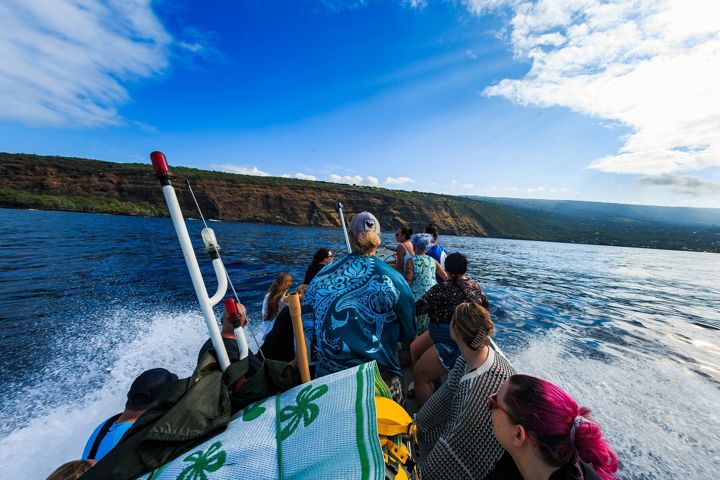
- Boat ride to the site. From Keauhou Bay, the manta site is close. Boats coming from farther harbors can take around 30 minutes.
- Briefing and gear. Your crew explains the rules, fits your mask and snorkel, and gives you a flotation belt.
- Into the water. You slip in and hold onto a lighted board with a few other guests. You float face down, legs out behind you, and you do not need to swim.
- The mantas arrive. The lights draw plankton, and the mantas come up to feed, sometimes inches below the board. Guides are in the water with you the whole time.
- Back aboard. After about 30 minutes in the water you climb back on, warm up and head in.
The operator we recommend: Hawaii Manta Ray
There are a number of manta boats on the Kona coast. The one we recommend is Hawaii Manta Ray, which runs out of Keauhou Bay, and these are the reasons:
- A 3-minute boat ride. Leaving from Keauhou Bay puts them minutes from the Keauhou manta site, which means less time bouncing in the dark and less chance of seasickness.
- Small groups. A maximum of 17 guests, so the board is not crowded and the guides can keep an eye on everyone.
- Serious light. About 300,000 lumens of dive light in the water to draw the plankton, and the mantas.
- Guides in the water with you for the whole snorkel.
- The Manta Guarantee. If no mantas show, you can ride again for free.
- Flexible booking. A 100% refund up to 72 hours before your trip.
- Reputation. 4.8 stars across about 3,265 Google reviews.
Their trip is called the moonlight manta snorkel, and our manta ray night snorkel review goes through what you get, who it is for and where to check in.
Snorkel vs dive
There are two ways to see the mantas at night, and the right one depends on whether you are a certified diver.
Snorkeling is the choice for almost everyone. You float at the surface on the lighted board, the mantas feed between you and the divers below, and you need no certification, just comfort in the water. Many people find the snorkel view better, since the mantas come up into the light right beneath your mask.
Diving is for certified scuba divers. Divers kneel or settle on the sandy bottom, around a ring of lights pointing up, and the mantas swoop over their heads. It is a different angle and a longer bottom time, but it needs a certification and a night dive’s worth of comfort. If you are certified, the Kona scuba diving trip we list also runs a two-tank night manta dive from $199.
For a deeper comparison, see this breakdown of the manta ray snorkel vs dive.
Prices and what is included
On Hawaii Manta Ray’s trip, rates are $118 for adults and $99 for children, before tax and booking fees. Your mask, snorkel and flotation are included. Wetsuits, life jackets and GoPro cameras are available to rent at check-in. Here is a full look at what a manta ray night snorkel costs and what changes the price from one boat to the next.
What to bring
- Your swimsuit, already on. You arrive ready to get in the water.
- A towel and a warm layer for the ride back. Even in Hawaiʻi, you will be cool after 30 minutes in the water at night.
- Dry clothes to change into afterward.
- Seasickness medication, if you are prone to it, taken before you board.
- A wetsuit, if you get cold easily. You can rent one at check-in.
- Leave the sunscreen in the car. It is night, and you do not need it in the water.
This manta ray snorkel packing list has a few more small tips.
Manta snorkeling with kids
The minimum age on the booking page is 4, and kids are some of the most excited people on the board. The deciding factor is not age but comfort: anyone on the trip needs to be a confident swimmer who is comfortable with their face in the water at night. Everyone floats with a flotation belt and holds onto the lighted board, and guides are in the water the whole time.
Our advice for families:
- Practice first. Get kids snorkeling in calm water during the day, earlier in the trip, so the mask and snorkel feel normal.
- Talk it through. Explain that it will be dark, that the mantas are gentle, and that they may swim very close.
- Rent a wetsuit for small kids, who get cold fastest.
- Pick the right night. A well-rested kid is a happier snorkeler.
For more, read this guide to manta ray snorkeling with kids.
Seasickness
Seasickness is the most common thing that spoils a manta night, and most of it is avoidable.
- Choose a short ride. A 3-minute ride from Keauhou Bay gives the ocean far less time to work on you than a long run down the coast.
- Take medication in advance if you are prone to it. Over-the-counter tablets work best taken before you board; follow the package directions or ask a pharmacist.
- Eat light. A small meal a couple of hours before is better than an empty stomach or a big dinner.
- Keep your face in the water. Once you are floating and watching the mantas, most people feel fine. Lifting your head and bobbing at the surface is what makes people queasy.
- Tell the crew if you feel unwell. They see it every week.
The best time to see manta rays in Kona
There is no manta season. The mantas feed off Kona every night of the year, so any month is a good month. What changes from night to night is the ocean: a big swell can cancel a trip in any season.
Within a night, later departures tend to see more mantas and quieter water. Book the snorkel early in your trip so there is time to go again if a night is cancelled. This guide to the best time to see manta rays in Kona goes into more detail, and our guide to the best time to visit the Big Island covers the rest of the year.
Getting to Keauhou Bay
Check-in for Hawaii Manta Ray is at their van by the Outrigger at Keauhou. Keauhou is a few miles south of Kailua-Kona and about 25 minutes from the Kona airport. If you are staying in Waikoloa, add about 30 minutes to Kona; our Big Island areas map shows the coast. Leave extra time on your first visit, and see these directions for getting to Keauhou Bay. Our Kona vs Hilo guide explains why the Kona side is the easiest base for the mantas.
Manta etiquette
- Don’t touch. Mantas have a protective coating on their skin, and touching it can harm them.
- Stay at the surface. Don’t dive down toward the mantas; let them come to you.
- Keep your legs up and floating behind you, so you don’t kick a manta passing below.
- Follow your guides. They set the rules for the animals’ sake as well as yours.
Make a day of it
The same bay is the starting point for the Kealakekua Bay snorkel by Zodiac, a 2.5 to 3-hour morning trip to the Captain Cook Monument with sea caves and spinner dolphins on the way. Pair the two for a full Keauhou day, as we do in our 7-day Big Island itinerary. For everything else on the island, start with our ranked list of things to do on the Big Island.
FAQ
Is the Kona manta ray night snorkel worth it?
Yes. It is our top-ranked activity on the Big Island. Mantas feed off Kona year round and sightings are very reliable, and floating above them at night is unlike anything else in Hawaiʻi.
Are manta rays dangerous?
No. Manta rays have no stinger and no teeth to bite with. They are filter feeders that eat plankton, and they show no interest in snorkelers.
How much does the manta ray night snorkel cost?
With Hawaii Manta Ray, it is $118 for adults and $99 for children, before tax and booking fees. Mask, snorkel and flotation are included.
Do I need to be a good swimmer?
You need to be a confident swimmer who is comfortable with your face in the water at night. You float with a flotation belt and hold a lighted board, so you do not have to swim much.
What is the minimum age for the manta snorkel?
Ages 4 and up, provided the child is comfortable snorkeling with their face in the water. Practice snorkeling in calm water during the day first.
What happens if no mantas show up?
With Hawaii Manta Ray, the Manta Guarantee lets you go again for free if no mantas appear. Mantas are wild, so no tour can promise them.
Should I snorkel or dive with the mantas?
Snorkel unless you are a certified diver. Snorkelers float at the surface with the mantas feeding just below; certified divers watch from the sandy bottom.
How long is the manta ray night snorkel?
About 1.5 hours in total, with around 30 minutes in the water. Check in early, in your swimsuit.
What is the best time to see manta rays in Kona?
Any night of the year. Later departures tend to see more mantas and calmer water. Book early in your trip in case the ocean cancels a night.
Written by Big Island locals who spend their days on the water, the volcano and the trails.