- Duration
- 2 hours
- Season
- Humpback season, roughly mid-November through April (peak January to March)
- Ages
- 3 and up
- Group size
- Up to 20 guests on a raft-style boat (6-guest minimum to run)
- Check-in
- Kawaihae South Boat Ramp (Kawaihae Small Boat Harbor), minutes from the Waikoloa, Mauna Lani and Mauna Kea resorts
- Best time
- January through mid-March, on the earliest departure available, when the Kohala Coast is usually calmest
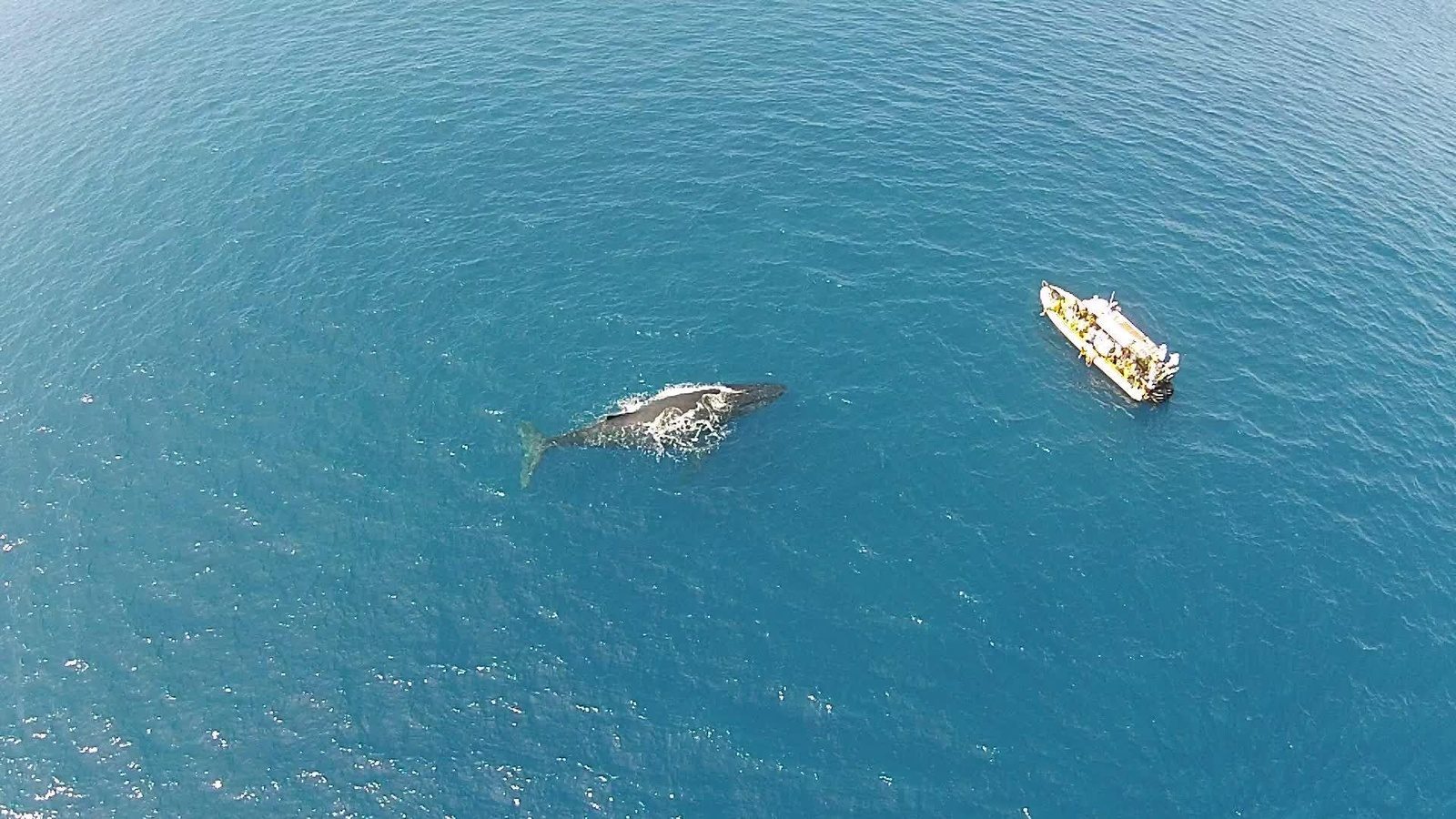
- A small raft-style boat that sits low to the water, so the whales are at eye level
- Leaves Kawaihae and is in the humpback nursery grounds within minutes
- A hydrophone lowered over the side so you can hear the humpbacks sing live
- Captains and crew who know whale behavior: mothers and calves, competition pods, breaches
- Snacks and drinks on board, and at most 20 guests
- 4.9 stars over 634 FareHarbor reviews
Every winter thousands of humpback whales swim down from Alaska to give birth and mate in warm Hawaiian water, and the calm Kohala Coast is one of their favorite nurseries. Big Island whale watching from Kawaihae puts you right in it within minutes of leaving the harbor. This trip runs two hours on a small raft-style boat that sits low to the water, with a hydrophone to hear the whales sing.
This page covers when to go, what the trip is like, what it costs, and how to get the best odds of a breach.
Why this made our list
The harbor is the first reason. Kawaihae sits at the north end of the Kohala resort coast, minutes from Waikoloa, Mauna Lani and Mauna Kea, and the boat is in the humpback nursery grounds within minutes of leaving the dock. You spend your two hours with whales rather than motoring to find them.
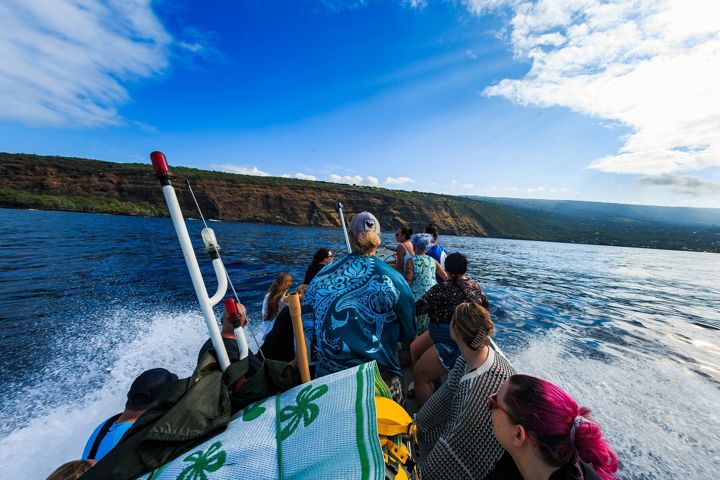
The boat is the second. It is a high-performance raft, similar to a Zodiac, that holds at most 20 guests. Sitting close to the water puts the whales at eye level, keeps motion low, and lets the captain reposition quickly when a whale surfaces somewhere else. When things go quiet, the crew drops a hydrophone over the side, and you hear the males singing under the boat.
The third is the crew. The captains know whale behavior well, and they explain what you are seeing as it happens: a mother resting with her calf, a curious calf inspecting the boat, or a competition pod of males charging after a female. That is why the trip holds a 4.9 rating across 634 reviews.
Why this operator
Whale watching runs out of Kona, Kawaihae and Hilo, on everything from big catamarans to small rafts. The big catamarans from Kona and Waikoloa are comfortable, often have a bar, and suit anyone who wants shade and a restroom. The raft is for people who want to be close to the water and close to the whales. Out of Kawaihae, it is the trip we book. If you would rather pair whales with snorkeling on the Kona side, the Kealakekua Bay Zodiac tour sees whales in season too.
What Big Island whale watching is like
The trip runs about two hours dock to dock. Here is how it goes.
- Check in at the Kawaihae South Boat Ramp. Arrive 30 minutes early. It is a barefoot boat, so your shoes are collected before you board.
- Into the nursery. The raft leaves the harbor and enters the nursery grounds quickly, where mothers and calves rest and play in the shallower water.
- Find the action. The captain watches for blows, tail slaps and breaches and moves the boat to where the whales are most active, always at a respectful distance.
- Listen. The hydrophone goes over the side and you hear the humpback song live.
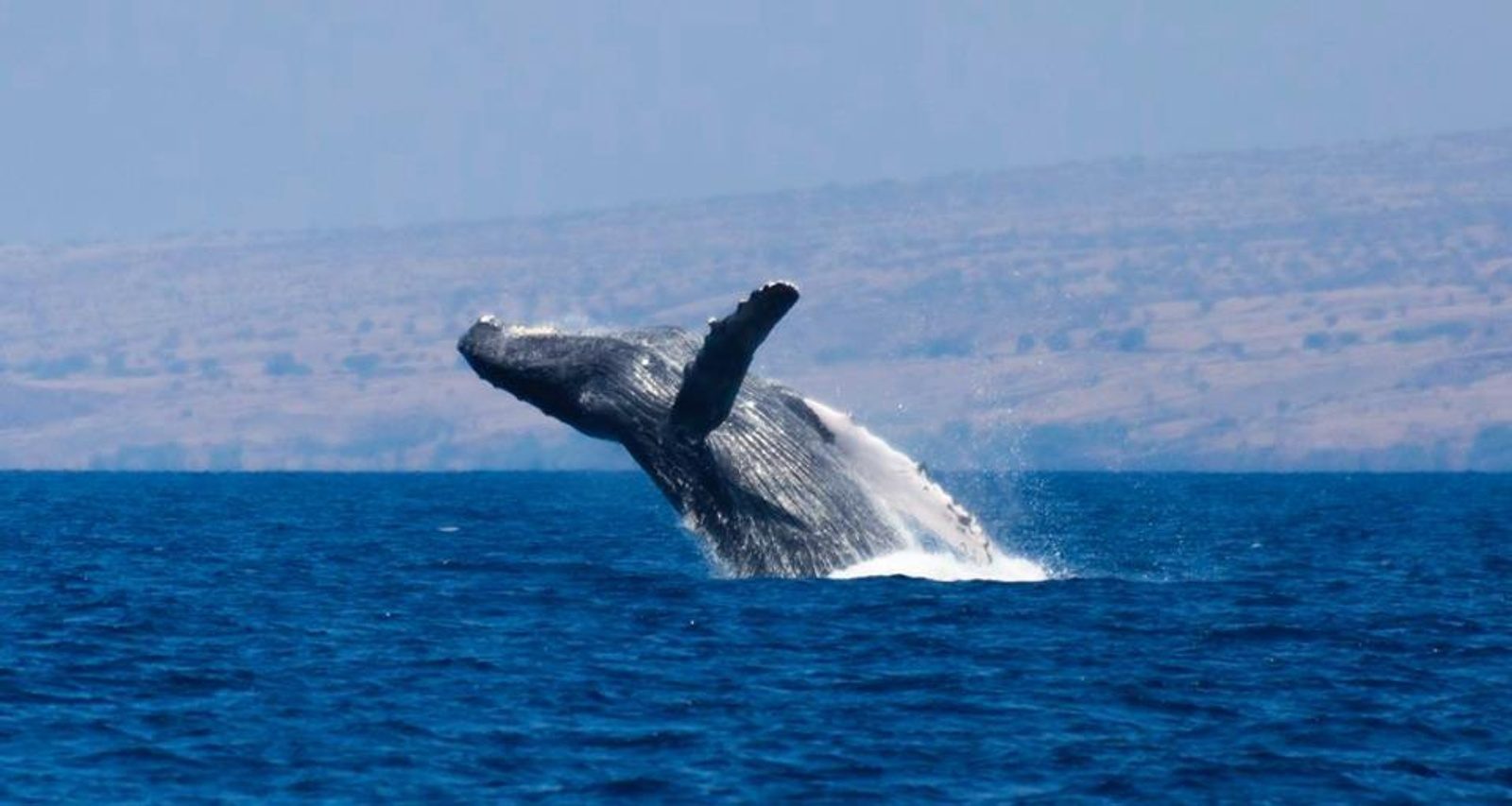
- Watch behavior. With luck you see a competition pod, a breach, or a calf curious enough to check out the boat. The crew explains it all as you go.
- Run home. Snacks and drinks come out on the ride back to the harbor.
Prices and what you get
The whale watch is from $95 per person plus tax and booking fees; adult and child rates are on the booking page. That covers two hours on the water, the hydrophone, a narrated trip from captains who know whale behavior, snacks and drinks, and dry storage for your gear. A tip for the crew is customary.
Trips need at least six guests to run. If the minimum is not met, the operator contacts you the day before to discuss options.
Who it’s for (and who should skip it)
Anyone visiting between December and April who wants to see humpbacks up close: families with kids 3 and older, couples, photographers and anyone staying on the Kohala Coast. It is a short trip, so it fits easily into a beach day.
Skip it if you are more than six months pregnant or have a neck or back injury; a raft moves in a way a big catamaran does not. Skip it if you want shade, a restroom and a cocktail; a larger boat suits you better. Outside whale season, put the time toward the Kona sunset sail instead.
Where to check in and how to get there
The boat leaves from the Kawaihae South Boat Ramp, also called the Kawaihae Small Boat Harbor south basin. From Waikoloa or Mauna Lani, drive about 12 miles north on Highway 19, turn left onto Kawaihae Road, and take the first harbor entrance; your confirmation has the gate-by-gate directions to the ramp and the bathroom building. Look for the yellow boat at the dock. From Kailua-Kona, allow about 45 minutes to an hour.
Park in the marked stalls or gravel areas, away from the trucks with trailers.
Best time to go
Time of year. Humpbacks are in Hawaiʻi from about December through April, with the peak from January through March. This operator runs from mid-November through April and advertises guaranteed sightings from January 1 to March 15. Our best time to visit the Big Island guide covers how whale season fits with the rest of the year.
Time of day. The Kohala Coast is usually calmest early, before the afternoon wind picks up, so take the earliest departure on your date. That said, the crew notes that some of the best whale activity happens in less than perfect weather, and the trip runs rain or shine.
Local tips before you book
- Book January to mid-March. That is the peak of the season and the guaranteed-sighting window.
- Wear slip-on sandals. Shoes come off at the dock.
- Bring a windbreaker. It is an open boat, and the spray is part of the deal.
- Take seasickness medicine early. The crew recommends the night before and the morning of, not right before boarding.
- Use mineral sunscreen. Hawaiʻi law bans oxybenzone and similar chemicals that harm reefs.
- Pair it with the beach. A morning whale watch leaves the afternoon for the Kohala Coast beaches; see our things to do on the Big Island guide for ideas.
The verdict
If you are on the Big Island between January and March, go whale watching, and if you are staying on the Kohala Coast, do it from Kawaihae on this raft. Minutes to the nursery, low to the water, a hydrophone to hear them sing, and a crew that knows what the whales are doing. Wear sandals, bring a jacket, and book early in your trip in case the weather moves you to another day.
Photos
Know before you go
What's included
- A 2-hour whale watch with a licensed captain and crew
- Live hydrophone listening when the whales are singing
- Whale behavior commentary throughout the trip
- Complimentary snacks and drinks
- Dry storage on board for your belongings
Not included
- Tax and booking fees
- Gratuity for the crew
- Hotel transfers; you drive to Kawaihae Harbor
What to bring
- Beach clothes and a light jacket or windbreaker; it is an open boat and you will get spray
- A towel and sunglasses
- Reef-safe, mineral sunscreen (Hawaiʻi bans oxybenzone and similar chemicals)
- Flip-flops or sandals that slip off easily; shoes are collected before boarding
- A camera, GoPro or binoculars
Restrictions
- Ages 3 and up (younger only on private charters)
- No one more than 6 months pregnant, and no guests with neck or back injuries
- Check in 30 minutes before departure; late arrivals may miss the boat
- Cancel at least 48 hours ahead for a refund; tours cancelled by the operator for weather or low bookings are refunded in full
Frequently asked questions
How much is whale watching on the Big Island?
This 2-hour raft trip from Kawaihae is from $95 per person before tax and booking fees. Adult and child rates are listed on the booking page.
When is whale season on the Big Island?
Humpbacks are in Hawaiian waters from about December through April, with the most whales from January through March. This operator starts trips in mid-November when the first whales arrive.
Is Big Island whale watching worth it?
In peak season, yes. The Kohala Coast is a humpback nursery, and on a small raft you are low to the water, close to the action and able to hear the whales sing on the hydrophone.
Are whale sightings guaranteed?
The operator advertises guaranteed sightings in peak season, January 1 to March 15. Check the booking page for how the guarantee works on your date.
How far is Kawaihae from Kona and Waikoloa?
The harbor is about 12 miles north of the Waikoloa and Mauna Lani resorts on Highway 19, roughly 15 to 20 minutes. From Kailua-Kona, allow about 45 minutes to an hour.
Can kids go whale watching?
Yes, from age 3. Kids love the hydrophone, and the snacks help; bring a jacket because the spray can make little ones cold.
Will I get seasick?
The Kohala Coast is on the sheltered side of the island and is usually calm, and a raft close to the water moves less than people expect. If you are prone to seasickness, take medicine the night before and the morning of, eat light and skip alcohol beforehand.
What should I wear on a whale watch?
Dress like you are going to the beach and bring a light jacket for spray and wind. It is a barefoot boat, so wear sandals you can slip off.
What happens if the weather is bad?
Trips run rain or shine. If the captain cancels for unsafe conditions, you get a full refund, and the operator contacts you by phone, text or email.
Ready to go?
Book this adventure
Prices from $95 plus tax and fees. Popular dates sell out a week or more ahead in peak season.
Last updated October 27, 2026 · Written by Big Island locals who spend their days on the water, the volcano and the trails.